
Google Review Removal Notifications: What Business Owners Must Know About Policy Enforcement

5 min read
Share
In the digital world, business owners worry about hacking, ransomware, and cyber threats. But there is another risk that can hit faster and hurt just as much: a sudden drop in your Google review rating.
It can feel like your storefront was boarded up overnight. The calls slow down. Website traffic dips. Customers hesitate. And you have no idea why.
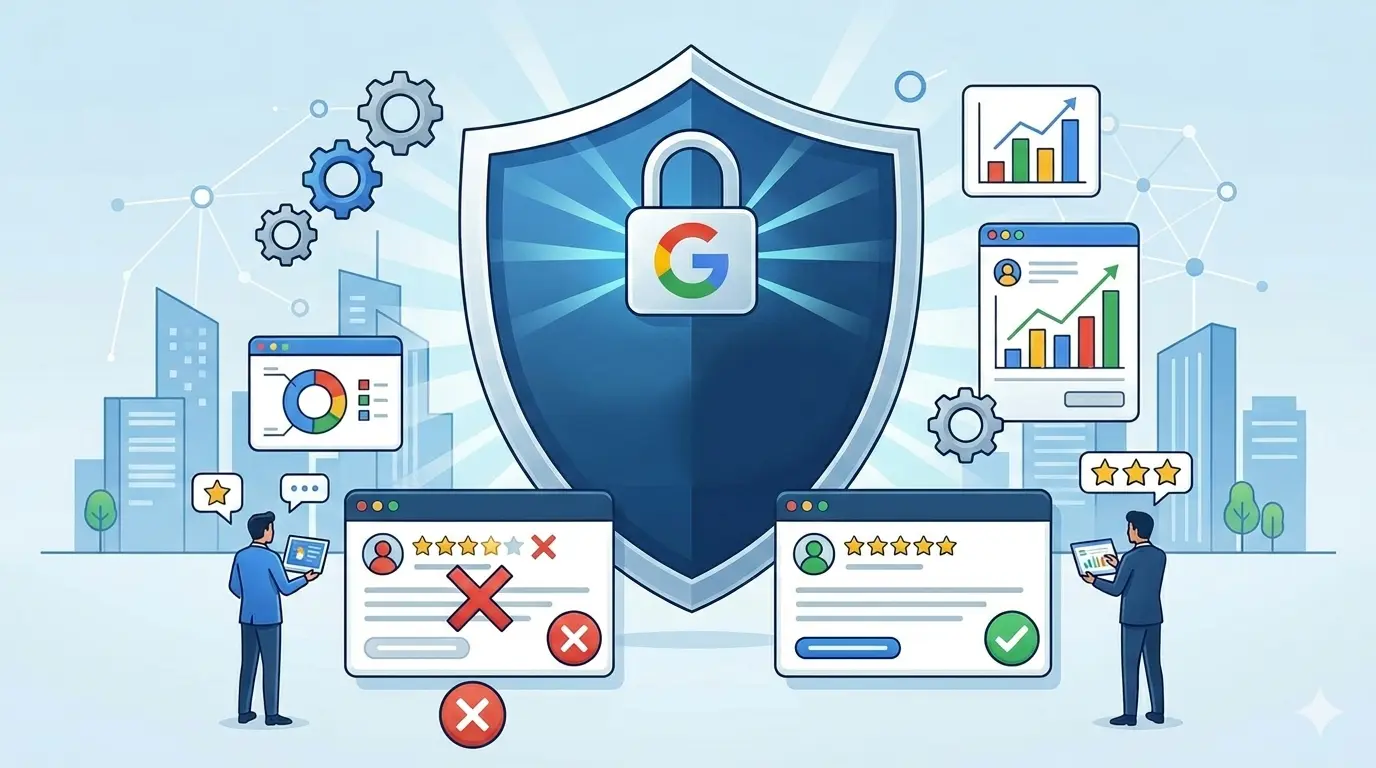
For years, Google’s review moderation system felt like a black box. Reviews disappeared, and some never posted. Business owners were left guessing. But that is changing because Google has introduced a direct email notification system that alerts business owners when fake or incentivized reviews are detected and removed.
This is more than a minor update. It is a clear tightening of enforcement that shifts responsibility directly onto the business owner.
Here is what that means.
From Silent Removal to Direct Notification
Previously, if Google detected suspicious reviews, they were quietly removed. There was no clear explanation and no immediate alert.
You might log into your dashboard days later and notice your review count dropped. Was it a glitch? Did a customer delete their feedback? You were left guessing.
Now, Google sends an email when reviews are removed due to policy violations.
That email changes the dynamic completely.
It creates a documented warning. Google is no longer passively moderating behind the scenes. It is actively informing you that a violation occurred. Once that notification hits your inbox, you are officially on notice.
Ignoring these emails is no longer an option.
Fake and Incentivized Reviews Are Treated the Same
Most business owners understand that fake reviews are a problem. Bot-generated ratings or paid spam campaigns clearly violate policy.
But Google now groups fake and incentivized reviews together in enforcement.
Incentivized reviews include:
- Offering discounts in exchange for reviews
- Giving free products for five-star ratings
- Running contests tied to review submissions
- Providing perks for positive feedback
Many see this as creative marketing. Google sees it as compromised data.
From Google’s perspective, if a review is influenced by compensation, it is not fully objective. Whether the customer genuinely liked the service does not matter. If value was exchanged for a rating, it violates policy.
That is a major shift for many local businesses and marketing teams.
Why Google Is Enforcing This Now
Google’s product depends on trust. If users search for the best mechanic, dentist, or plumber and consistently see inflated ratings that do not reflect reality, trust erodes.
Stricter enforcement aligns with broader industry trends. Regulators are increasing pressure on platforms to address misleading reviews. Transparency and authenticity are becoming non-negotiable.
The new email system is not a glitch. It is a feature designed to operationalize compliance at scale.
Google is moving from passive moderation to automated enforcement.
What “Profile Restrictions” Really Mean
The email is only the first step.
Google has made it clear that continued violations can lead to profile restrictions.
That phrase may sound administrative, but the impact can be serious:
- You may be blocked from receiving new reviews.
- Your existing reviews could be hidden.
- Your local search visibility could be reduced.
- You could lose placement in the map pack.
For local businesses, visibility in the map pack directly impacts revenue. Reduced exposure means fewer calls, fewer clicks, and fewer customers.
The email is the warning. Continued violations trigger consequences.
The Importance of the Word “Continued”
If you receive a notification, it does not automatically mean your profile will be restricted.
The keyword is continued. The email serves as a citation. It allows you to correct the issue. If you stop the incentivized activity immediately, you reduce the risk of escalation.
If you ignore the warning and continue the behavior, enforcement becomes much more likely.
Treat these notifications as high-priority operational alerts.
What To Do If You Receive a Notification
If you open your inbox and see a review removal email:
1. Stay Calm
This is a warning, not an immediate shutdown.
2. Audit Your Marketing
Review recent campaigns and vendor activity. Ask:
- Did we run a promotion tied to reviews?
- Did an agency offer incentives on our behalf?
- Did an employee promise perks for positive feedback?
3. Stop the Activity Immediately
Remove any incentivized language. Cancel contests. Adjust messaging. If necessary, reevaluate vendor relationships.
4. Monitor Your Profile
Ensure the violations stop. Continued compliance lowers the risk of restrictions.
Think of this as digital compliance, not just marketing cleanup.
Agencies, Employees, and Owner Responsibility
One important reality stands out: the profile owner holds the risk.
Even if an employee or agency initiated the incentivized reviews, the business owner receives the warning. The platform does not separate responsibility.
In fact, this new system can act as an audit tool. If you hired a reputation management firm and suddenly receive removal notifications, that is a signal to investigate their tactics.
Accountability now sits firmly with the business.
Why This Is Good News for Honest Businesses
There is a positive side to this policy shift.
If fake and incentivized reviews are systematically removed, inflated ratings across industries may begin to normalize. A 4.5 rating will mean more when it reflects real customer experiences.
For businesses that have always followed the rules, this levels the playing field. Competitors who relied on shortcuts may lose their artificial advantage.
Trust becomes the true differentiator again.
The Impact on Enterprise Analytics and Data Integrity
This shift goes beyond reputation management.
For organizations that rely on enterprise analytics to guide decision-making, review data plays a meaningful role in performance tracking. Ratings influence conversion rates, customer acquisition models, brand perception metrics, and local search visibility dashboards.
If reviews are artificially inflated or suddenly restricted due to policy violations, the integrity of your data is compromised.
Accurate digital marketing performance depends on clean inputs. When review data is manipulated, reporting becomes distorted. When restrictions are applied, visibility metrics change overnight.
In a data-driven environment, compliant review practices are not just about avoiding penalties. They protect the reliability of the insights your team uses to make strategic decisions.
The Bigger Shift: Reviews as Compliance
Google Business Profiles are no longer simple directory listings. They are dynamic, regulated digital assets.
You do not own the platform. You operate within its rules.
Just as restaurants must comply with health standards to keep their doors open, businesses must comply with digital review policies to maintain visibility.
If you want the exposure, you must accept the oversight.
Final Takeaway
Google’s tightening of its review policy marks a clear evolution in accountability.
- Fake and incentivized reviews are treated equally.
- Business owners are directly notified of violations.
- Continued noncompliance can lead to profile restrictions.
- Ignoring warning emails increases risk.
The message is straightforward: your review profile must reflect authentic customer sentiment.
Keep your digital presence clean.
Because in the world of local search, visibility depends on trust.
Follow Us
Belle G. – Tech Researcher, Daily News
Stay Informed. Stay Ahead.
Subscribe to our newsletter to receive industry insights, strategic updates, and expert perspectives—curated to support your business growth.